
Medical Building Automation Solutions
When Environmental Conditions Matter, Control MattersHealthcare facilities operate in environments where a building’s air quality conditions can have consequences beyond just the comfort of occupants.
Temperature, humidity, airflow, and pressure can all play important roles in maintaining appropriate conditions for different operational spaces and applications. At the same time, facility teams must carefully manage energy, equipment, and building performance without compromising the environments people depend on.
Smart Controls provides the sensing, control and automation technology that helps medical facilities monitor and manage those conditions with greater precision.
Rather than treating the controller as the solution, we look at what the facility needs to accomplish and provide the extensive technology support that can make that outcome possible.
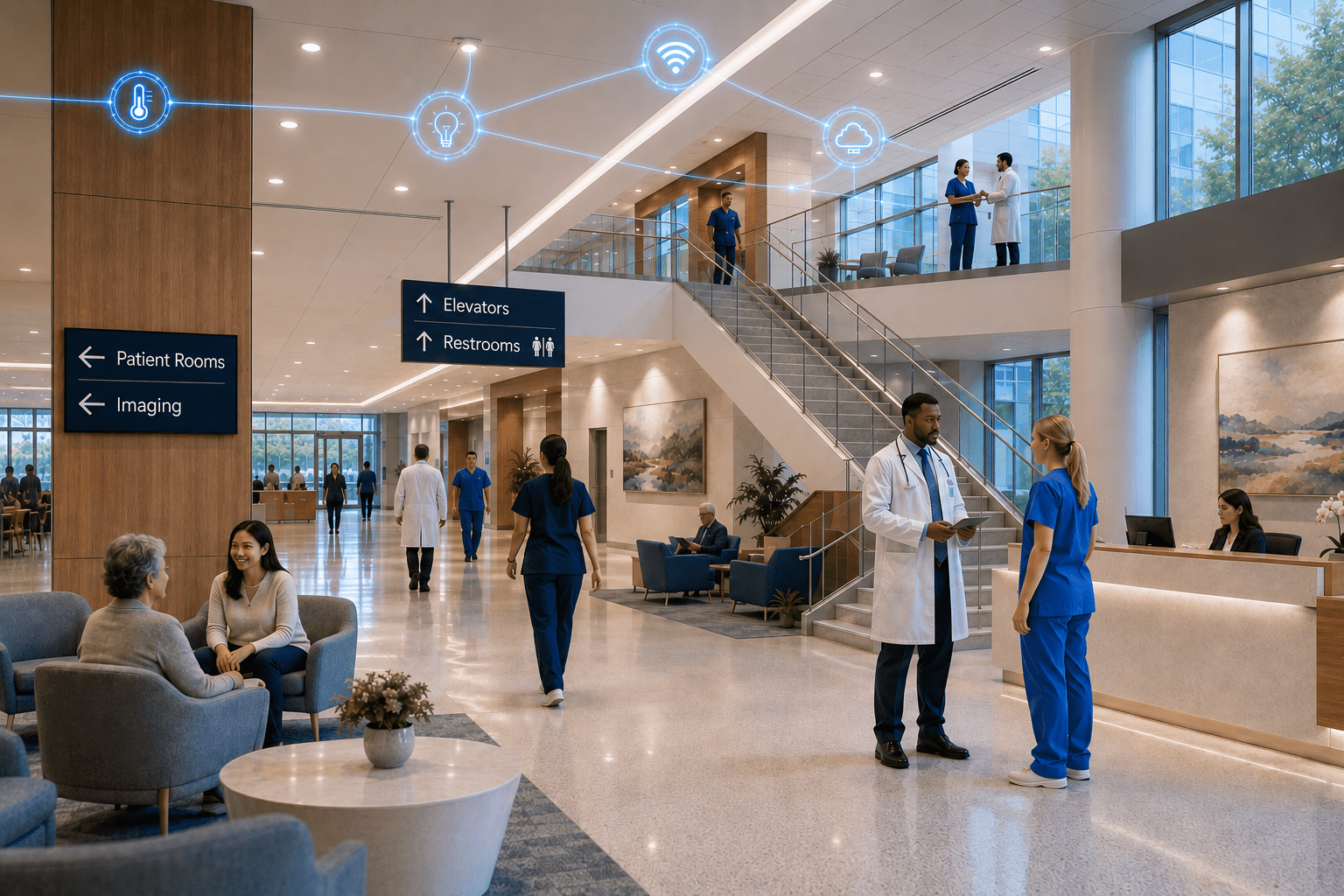
Monitor the Conditions That Matter
A building cannot respond intelligently to conditions it cannot measure. Environmental sensing provides the foundation for more responsive control.
Smart Controls’ sensor portfolio includes devices capable of monitoring temperature, humidity, CO₂ and VOCs, while dedicated airflow sensing can provide additional air quality management for applications where airflow measurement is critical.
These real-time inputs can integrate seamlessly as part of a larger control strategy designed around the unique requirements of a specific room or wing of a medical building.
Support Consistent Environmental Conditions
Medical facilities contain many different environments.
Patient areas, offices, laboratories, procedure spaces, storage areas, and other specialized spaces can all have different requirements. Therefore, a single building-wide strategy is not necessarily appropriate for every application.
Flexible building automation allows control strategies to be developed around those differences.
Smart Controls controllers provide configurable inputs and outputs for a variety of equipment-control applications, while unique programmable control gives system integrators the ability to develop application-specific strategies.
Make Existing Infrastructure Work Smarter
Healthcare facilities often evolve over time. New equipment may be installed alongside older systems, and different build areas may simultaneously use different generations of control technology. As a result, replacing an entire control infrastructure all at once may not always be practical.
Smart Controls’ multi-protocol controllers support BACnet, MODBUS and LonTalk protocols, providing system integrators with greater flexibility when developing optimized solutions around a building’s existing systems.
That flexibility can help facilities move toward smarter control without assuming every piece of infrastructure needs to be replaced.
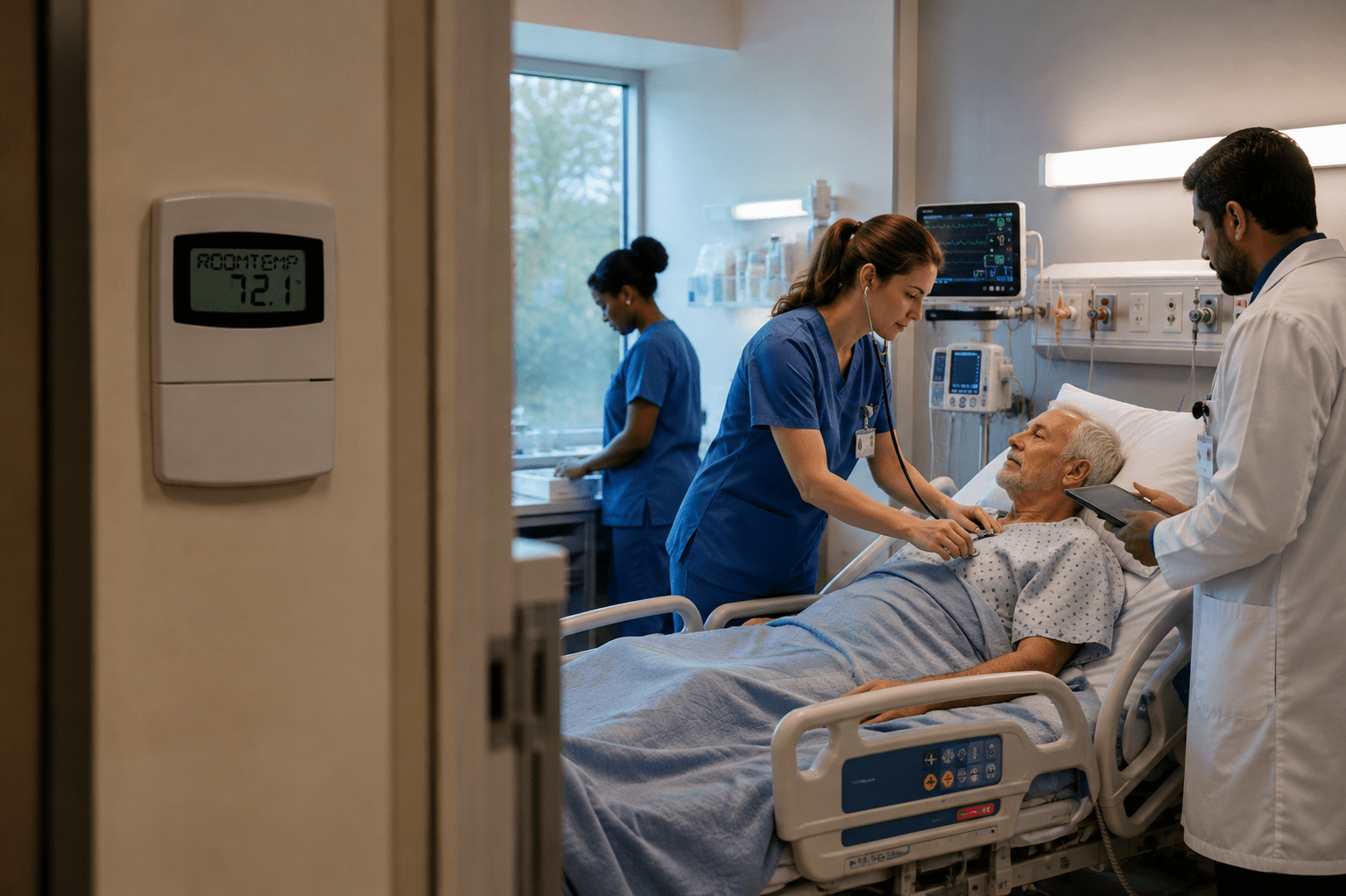
The Smart Controls Approach
Healthcare professionals have enough to manage without worrying about whether the building is responding appropriately to changing HVAC conditions.
Smart Controls helps facility and controls professionals build reliable automation strategies that put environmental information and equipment control where they belong: together.
Flexible Controllers
for equipment-level automation
Programmable Control
for application-specific strategies
Multi-Protocol Communication
for greater integration flexibility
Network Technology
for connecting building systems
Environmental Sensing
for monitoring air-quality conditions
Emerging 10BASE-T1L Solutions
for optimizing Ethernet connectivity
Smart Controls is working on a new generation of integrated building automation solutions centered around innovative technologies such as Single Pair Ethernet (SPE), 10BASE-T1L, enhanced BACnet integration and next-generation application programming.
Your Building Is Unique. Your Control Solution Should Be Too.
Whether your priority is energy efficiency, occupant comfort, indoor air quality, legacy equipment modernization or a more connected control network, Smart Controls can help you build the technology around your facility’s needs.